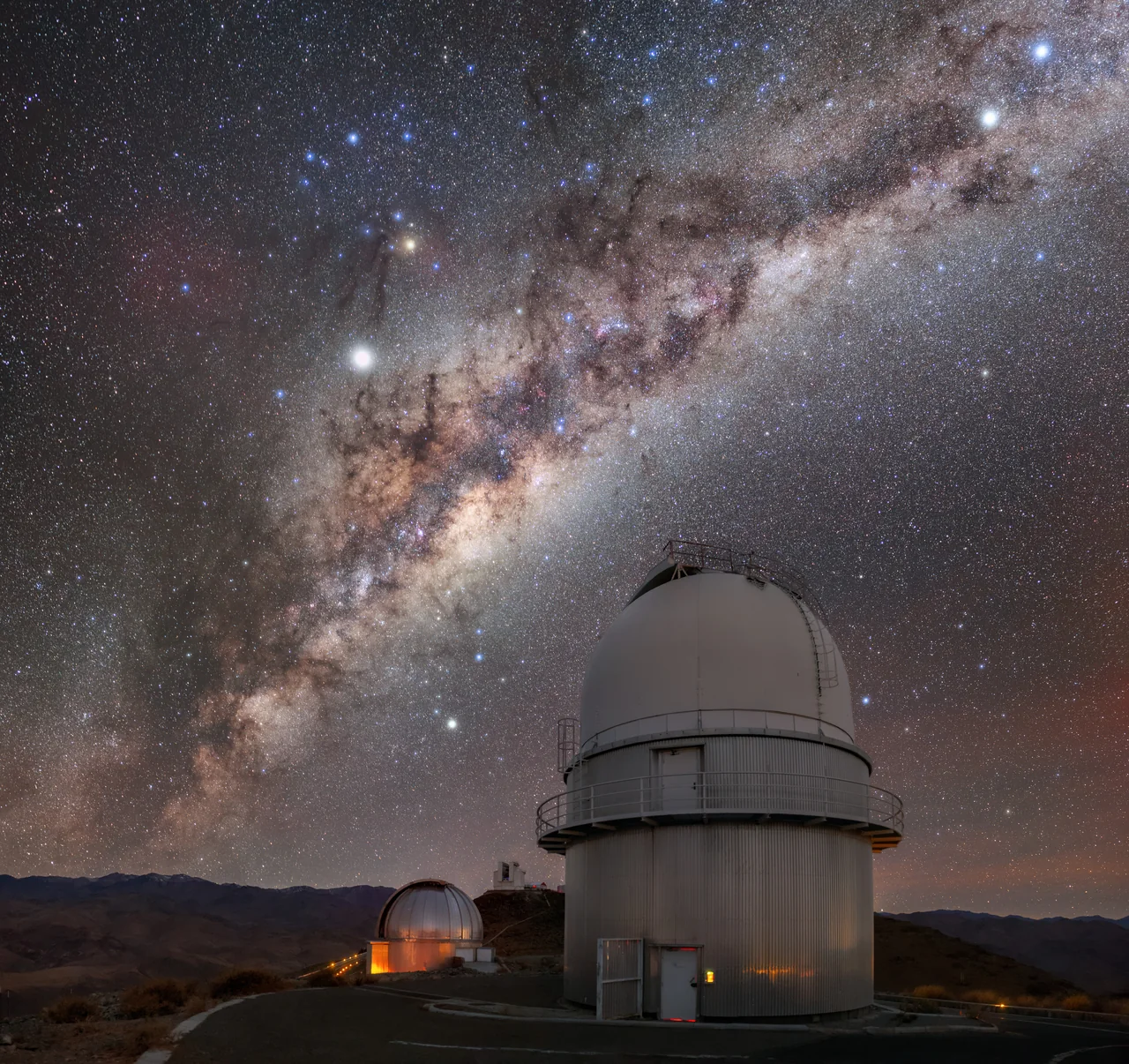
Photograph the Milky Way from New England
The bright core of our galaxy is up in New England skies from about March to September. Here are the exact nights, the places, and the settings.
Milky Way season, night by night
Nights each month when the Milky Way's core is at least 10° up during full darkness with the Moon below the horizon, computed for Sturbridge, MA (the rest of New England is within a few days).
Early season (March–April): the core rises before dawn, so plan for a 3–5 AM shoot. Peak season (May–July): it's up by midnight and highest around 1–2 AM, with the shortest nights. Late season (August–September): it's already in the southwest at dusk, an easy evening shoot.
From about 42–45° north the core peaks only around 15–20° above the horizon, so trees and town lights to the south matter more than anything. A lake, beach, field or summit that faces south is worth the drive.
- Fri, Apr 2, 20273:19 AM–4:51 AM · best 4:51 AM
- Sat, Apr 3, 20273:07 AM–4:49 AM · best 4:49 AM
- Sun, Apr 4, 20273:06 AM–4:47 AM · best 4:47 AM
- Mon, Apr 5, 20273:05 AM–4:45 AM · best 4:45 AM
- Tue, Apr 6, 20273:04 AM–4:43 AM · best 4:43 AM
- Wed, Apr 7, 20272:53 AM–4:41 AM · best 4:41 AM
Times for Sturbridge, MA. Check the cloud forecast on the day.
Camera settings that work
- Shoot RAW, fully manual. Turn off long-exposure noise reduction and image stabilisation on a tripod.
- Widest aperture. f/1.4–2.8 on a 14–24 mm lens. Stop down one notch if the corners look smeared.
- Focus on a star. Manual focus, live view magnified ×10 on a bright star or planet, adjust until it's the smallest point. Tape the ring.
- Exposure time from the calculator. Usually 8–20 seconds; longer turns stars into short lines.
- ISO 1600–6400. Start at 3200, check the histogram, and keep it off the left edge.
- White balance around 3800–4200 K for a natural sky; you can change it later in RAW.
- Take many frames. 10–20 identical shots stacked in Sequator, Starry Landscape Stacker or Siril cut the noise dramatically.
- Fight the dew. New England nights are humid: a USB lens heater strip saves the shoot.
How long before stars trail?
The NPF rule (by Frédéric Michaud, Société d'Astronomie Populaire) accounts for your sensor's pixel size, so it's stricter than the old 500 rule on modern high-resolution cameras.
Dark spots for the core
 Bortle 1.0
Beetle Mountain
Patten, ME
 Bortle 1.0
Hudson Mountain
Portage Lake, ME
 Bortle 1.0
Willard Mountain
Masardis, ME
 Bortle 1.0
Peaked Mountain
Ashland, ME
 Bortle 1.1
Deasey Mountain Lookout Tower
Patten, ME
 Bortle 1.1
Round Pond Mountain Fire Tower
Allagash, ME
Watch your own sky 24/7, and catch every meteor.
Turn an ordinary IP camera into an AI sky camera: it records all night, catches meteors, fireballs and satellites, names planes and satellites from public orbit and flight data, and makes one-click Shorts of the best moments.
- Runs on your own Windows, Mac, Linux or Raspberry Pi 5
- Join the SkyWatch Network map and help cover America's sky
- Go live on YouTube for big sky events
 LIVE 24/7
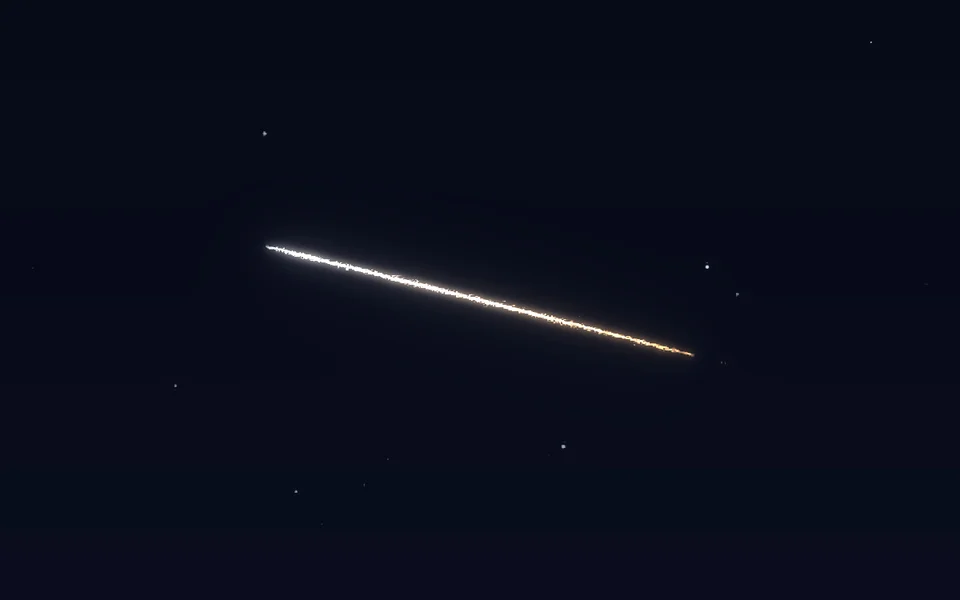
A real catch, not a renderMeteor · Nov 9, 2026 · 3:44 AM · our 12MP backyard sky cam
40meteors confirmed
279satellites named
12,917aircraft logged
Watch our sky live →